

Concrete Resurfacing
vs. Concrete Replacement
A Comprehensive Guide for
Homeowners and Property Managers
Overview
When concrete surfaces deteriorate, property owners are often faced with a major decision: resurface the existing concrete or replace it entirely. While both options can improve appearance and functionality, they differ significantly in cost, disruption, sustainability, and long-term performance.
This guide explains the differences between professional concrete resurfacing and full concrete replacement, and when each approach is appropriate.
What Is Concrete Resurfacing?
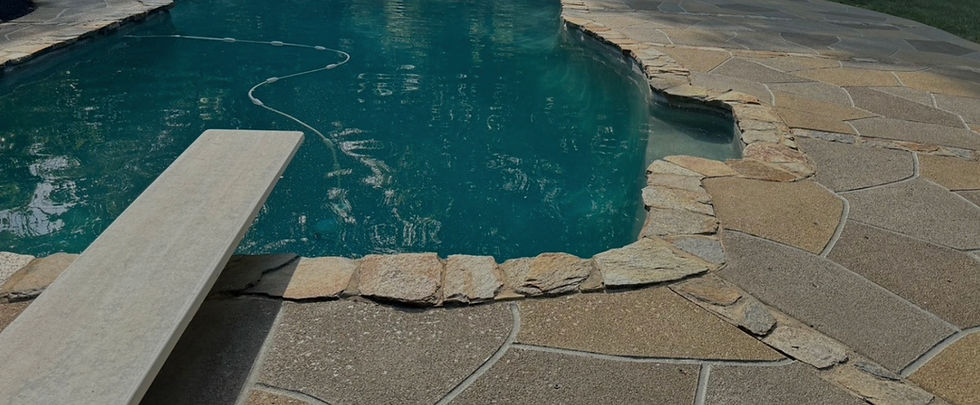
Concrete resurfacing is the process of restoring an existing concrete slab by repairing surface damage and applying a specialized cement-based system that bonds permanently to the original structure. Professional resurfacing systems like RenuKrete:
Preserve the existing slab
Repair cracks and surface wear
Create a new, durable, decorative finish
Extend the lifespan of the concrete by decades
Resurfacing is best suited for structurally sound concrete that has cosmetic damage, surface spalling, discoloration, or wear.
What Is Concrete Replacement?
Concrete replacement involves:
Demolishing the existing slab
Removing and hauling debris
Re-pouring new concrete
Allowing extended curing time
Replacement is typically required only when the slab has severe structural failure, such as major settlement, heaving, or foundational instability.
Key Differences: Resurfacing vs Replacement
Cost Comparison
Concrete resurfacing generally costs significantly less than full replacement. Replacement includes demolition, disposal, new materials, labor, and extended downtime — all of which increase expense. Resurfacing eliminates demolition and material waste, making it a more cost-efficient solution in most cases.
Time & Disruption
Resurfacing: Completed in days with minimal disruption
Replacement: Often takes weeks, including demolition, curing, and site restoration
For homes, businesses, and hospitality properties, resurfacing allows faster return to normal use.
Durability & Longevity
Modern cement-based resurfacing systems are designed for long-term performance, not temporary cosmetic fixes. When properly installed, resurfaced concrete can perform comparably to new concrete — without the risks associated with new slab curing and settling.
Environmental Impact
Concrete resurfacing is a sustainable alternative to replacement:
Reduces landfill waste
Minimizes raw material use
Lowers carbon emissions associated with cement production
Design & Customization
Resurfacing offers greater design flexibility than standard poured concrete. Systems like RenuKrete allow for:
Stone-inspired textures
Seamless, non-repetitive patterns
Replacement concrete often requires additional decorative processes to achieve similar results.
When Replacement Is Necessary
Concrete replacement may be required if:
The slab has major structural failure
There is extensive movement or heaving
Subgrade issues compromise integrity
A professional RenuKrete estimate is essential before choosing either option.
Why Many Property Owners Choose RenuKrete
RenuKrete bridges the gap between aesthetics and structural performance by offering:
Cement-based resurfacing (not coatings)
Mechanical bonding to existing concrete
Proven performance in freeze-thaw climates
Custom design tailored to each project
For most deteriorated but stable slabs, resurfacing with RenuKrete delivers the best balance of cost, durability, and appearance.
Conclusion
Concrete replacement is sometimes necessary — but in many cases, it is unnecessary, disruptive, and expensive. Professional resurfacing offers a smarter alternative that restores performance and appearance while preserving the existing structure.